Canine Dirofilariosis and Molecular Diagnosis
Field Research Report: Clinical Workflows, Species Differentiation, and Market Signals
Executive Summary & Key Diagnostic Challenges
The Hungarian field observations highlight a practical diagnostic challenge in European veterinary clinics. Climate change and the progressive restriction of certain mosquito-control insecticides in the EU over the past decade may have contributed to changing vector exposure patterns, underscoring the need for appropriate diagnostic strategies for canine infections caused by Dirofilaria immitis and Dirofilaria repens. The rapid antigen tests observed during the field visits targeted D. immitis and could not differentiate between the two species, highlighting the complementary role of species-specific diagnostic methods.
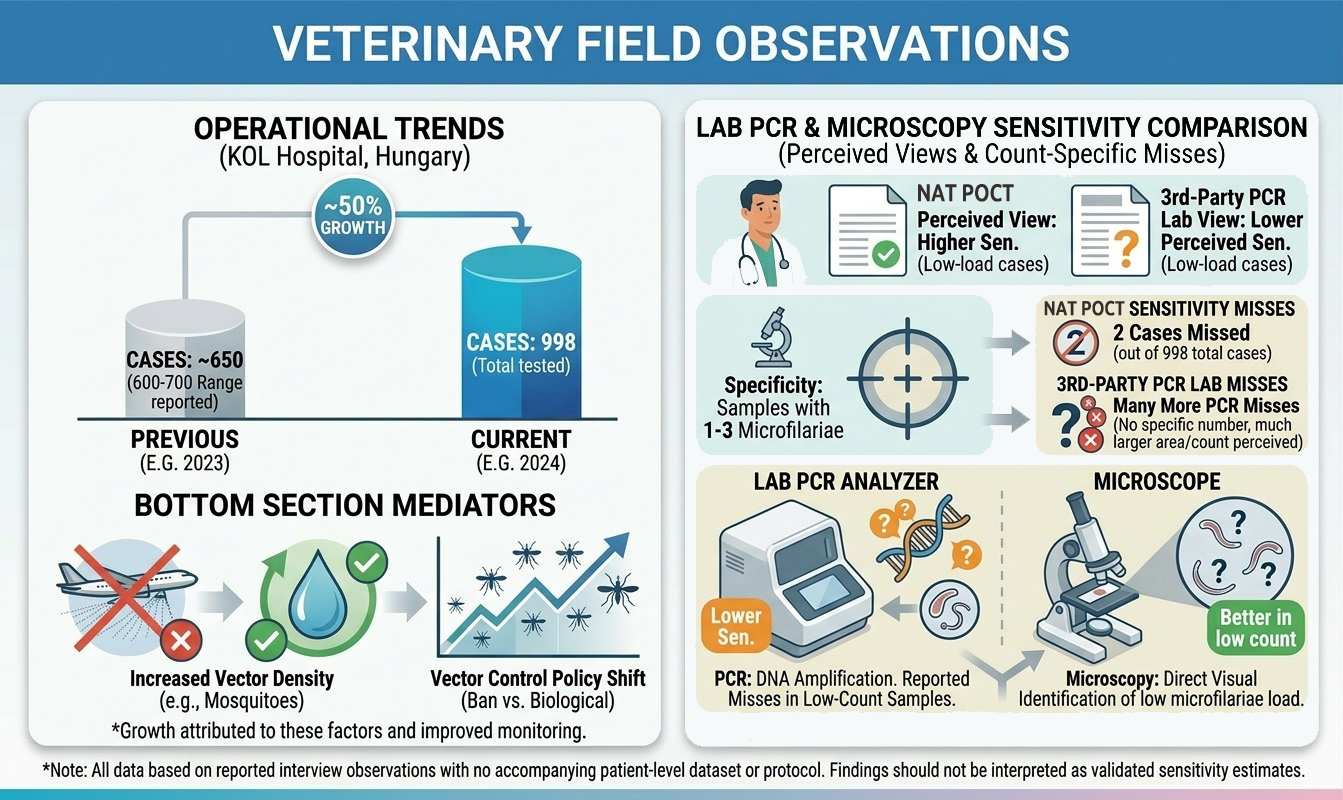
The visits also documented substantial use of the modified Knott’s test at one KOL-associated veterinary clinic, with reported annual test volumes increasing from 600–700 in 2023 to 998 in 2024. These observations suggest that, in the current heartworm diagnostic landscape, species differentiation, diagnostic specificity, and standardized testing protocols across clinical settings warrant particular attention. The market opportunity may lie less in pursuing incremental improvements in antigen assay sensitivity and more in developing a practical molecular screening solution that is simple enough for routine veterinary use and capable of addressing diagnostic gaps that antigen-only testing cannot resolve.
1. Overview & Zoonotic Significance
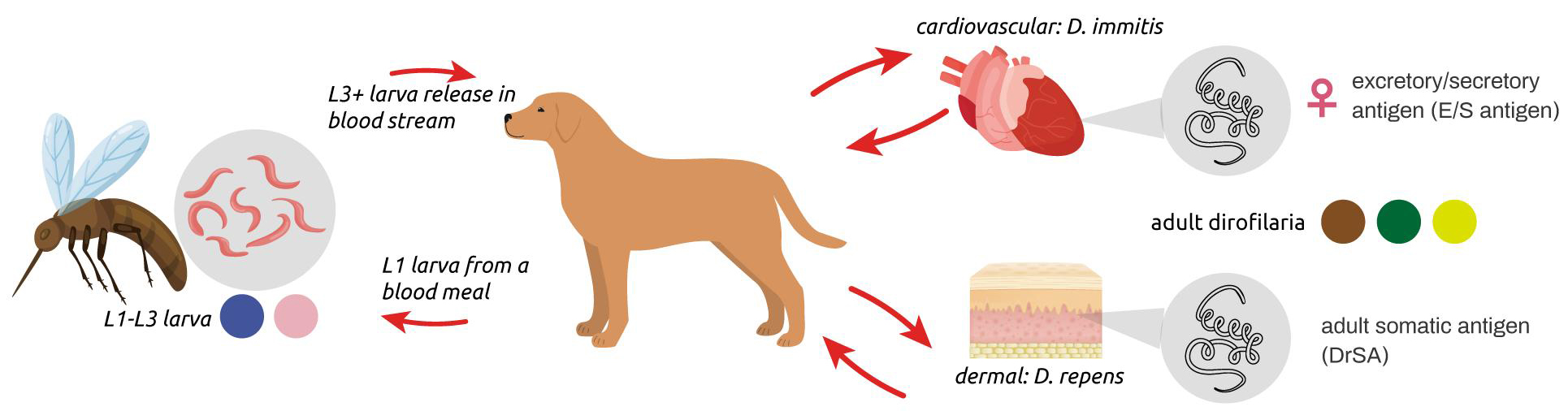
Figure: Diagnostic workflow and chart
Dirofilaria immitis
Primary Disease: Heartworm Disease (Canine Heartworm)
- Pathology: Primarily targets and parasitizes the cardiovascular system.
- Clinical Impact: Leads to severe cardiovascular disease, pulmonary arterial damage, and heart failure.
Dirofilaria repens
Primary Disease: Subcutaneous Dirofilariasis
- Pathology: Adult worms parasitize subcutaneous tissues long-term.
- Symptoms: Multifocal alopecia (patchy hair loss) and skin breakdown/ulceration.
- Clinical Pitfall: Subcutaneous nodules are frequently misdiagnosed as tumors (neoplasms).
Ocular Migration & Zoonotic Vector:
Larvae and adult worms of Dirofilaria species can undergo cutaneous or visceral migration. Notably, parasites can migrate to the eye structure causing Ocular Dirofilariasis. Both parasites pose zoonotic risks, making accurate canine screening essential for public health protection.
2. Clinical and Diagnostic Context
Dirofilaria immitis is associated with canine heartworm disease, whereas Dirofilaria repens is associated with subcutaneous dirofilariosis and is zoonotic. The original field research notes that clinical signs may overlap with other parasitic conditions, making species-level differentiation highly relevant in selected cases.
Microscopy Challenges
While microscopic examination is widely taught, reliable morphological differentiation between microfilariae requires substantial expertise and specialized training.
Molecular Testing Integration
Molecular assays (PCR/POCT) offer absolute species differentiation, addressing the cross-reactivity and diagnostic ambiguity inherent in standard rapid immunochromatographic assays.
3. Diagnostic Methods Comparison
| Method | Primary Target | Species Differentiation | Ease of Use | Limitations |
|---|---|---|---|---|
| Antigen Rapid Tests | D. immitis adult female antigen | No (Target specific) | Very High (In-clinic) | Misses D. repens; potential occult infections or low worm load false negatives. |
| Modified Knott’s Test | Circulating microfilariae concentration | Moderate (Morphology) | Moderate | Requires manual labor and high skill to measure tail/head dimensions. |
| Direct Blood Smear | Motile microfilariae | Poor | Very High | Low sensitivity; frequently yields false negatives in low microfilaria counts. |
| Molecular Diagnostics (Lab PCR) | Parasite DNA sequences | Absolute | Low (Lab dependent) | Higher cost, requires external reference lab or advanced lab equipment. |
| Molecular POCT | Parasite DNA / RNA Target Sequences | Absolute | High (Point-of-Care) | Higher initial device/reagent cost; rapidly expanding in clinical availability. |
4. Field Observations from Two Veterinary Hospitals
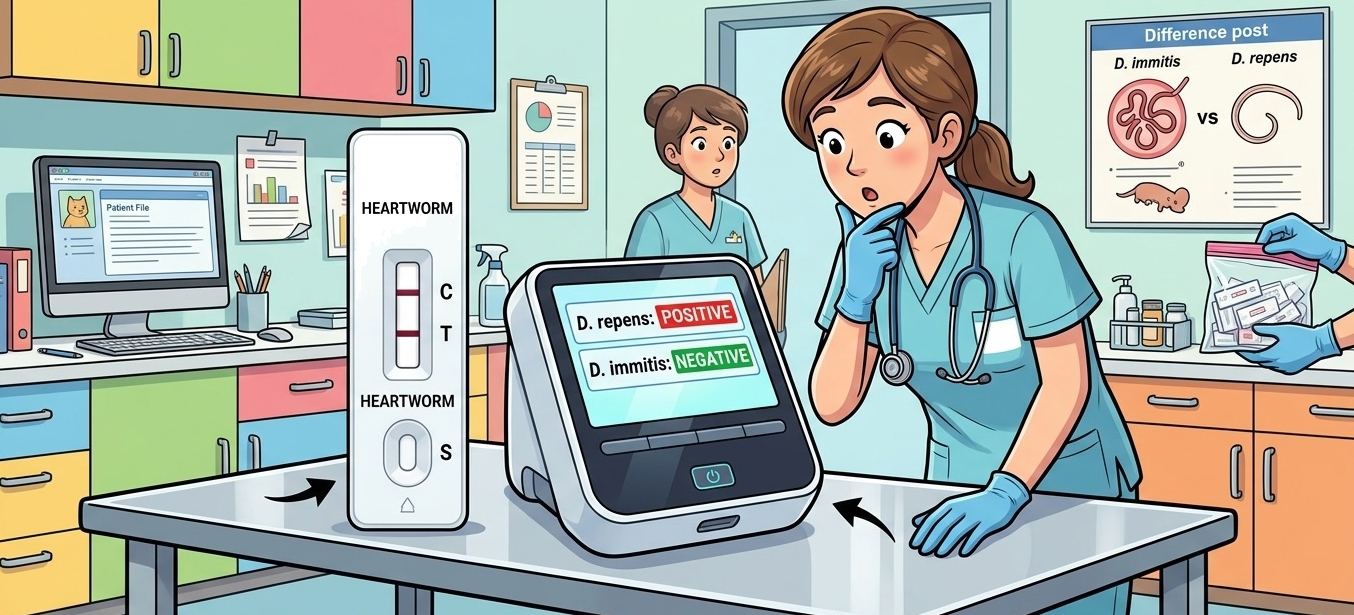
Figure: Clinical Status Quo & Diagnostic Challenges
Hospital A (KOL Clinic)
- Heavy reliance on combined modified Knott's technique for microfilaria detection.
- High annual sample throughput due to regional referral status.
- Emphasis on secondary molecular confirmation when rapid kits show ambiguous results.
Hospital B (General Practice)
- Rapid antigen cassette testing used as primary point-of-care tool.
- Limited microscopic species identification due to time/staff constraints.
- High interest in affordable multiplex kits capable of identifying both species concurrently.
Annual Modified Knott's Test Count
Reported clinical volume & 2025 estimate
2023: 600–700 reported tests; 2024: 998 reported tests; 2025: approximately 1,500 estimated tests.
6. Indicative Market Sizing Recorded in Source
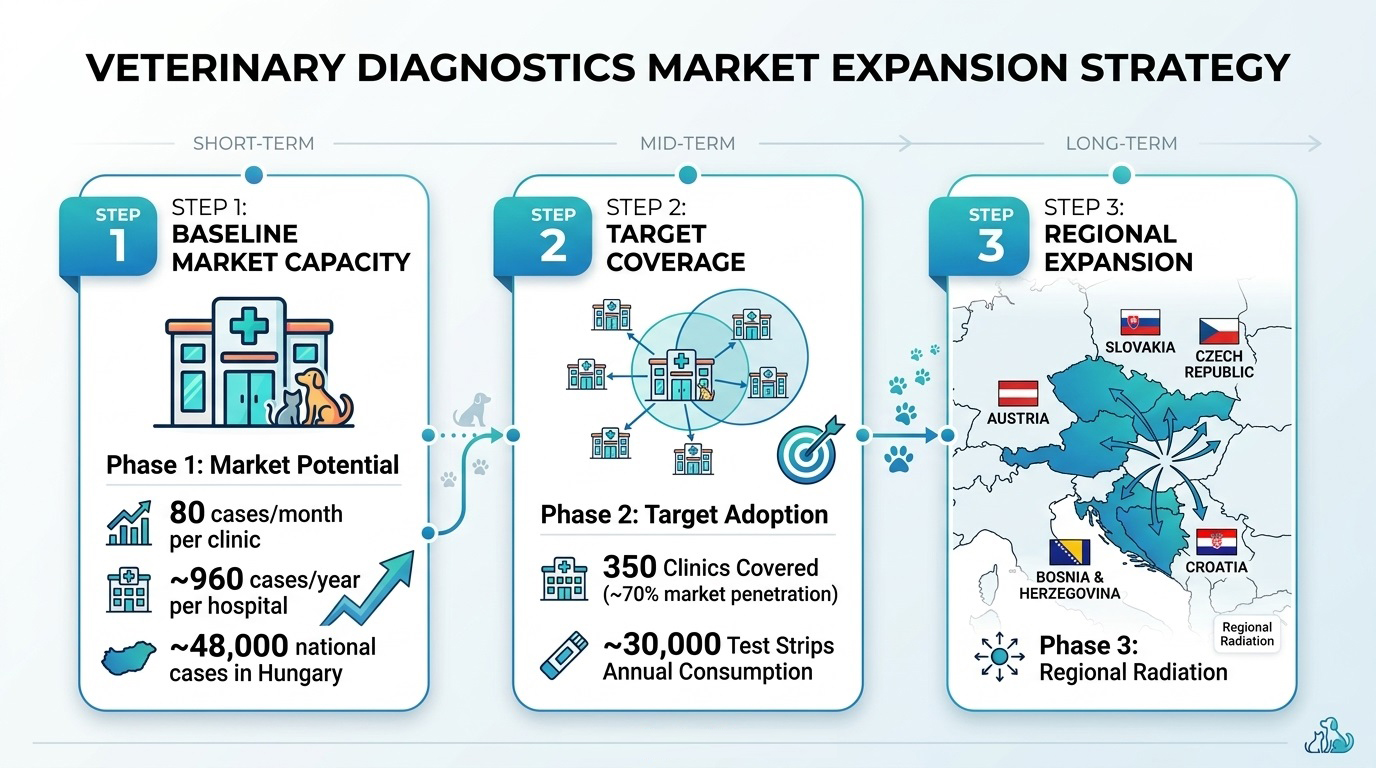
Figure: Future market trends and outlook
7. Implications & Research Questions
Assay Differentiation Need: How can diagnostic manufacturers optimize affordable point-of-care tests to distinguish D. immitis from D. repens without adding extreme cost?
Treatment Protocols: Given that D. repens requires different therapeutic management than severe heartworm disease, does non-differentiated screening lead to inappropriate medication regimes?
Zoonotic Surveillance: What role should veterinary clinics play in tracking D. repens as a reservoir for human subcutaneous/ocular infections?
8. Limitations
Scope Constraints: This field report is based on observational site visits to two veterinary clinics in Hungary and localized KOL figures.
Data regarding test volumes (600–700 in 2023 to 998 in 2024) reflects site-specific records and should not be generalized to national Hungarian veterinary market totals without broader epidemiological sampling.